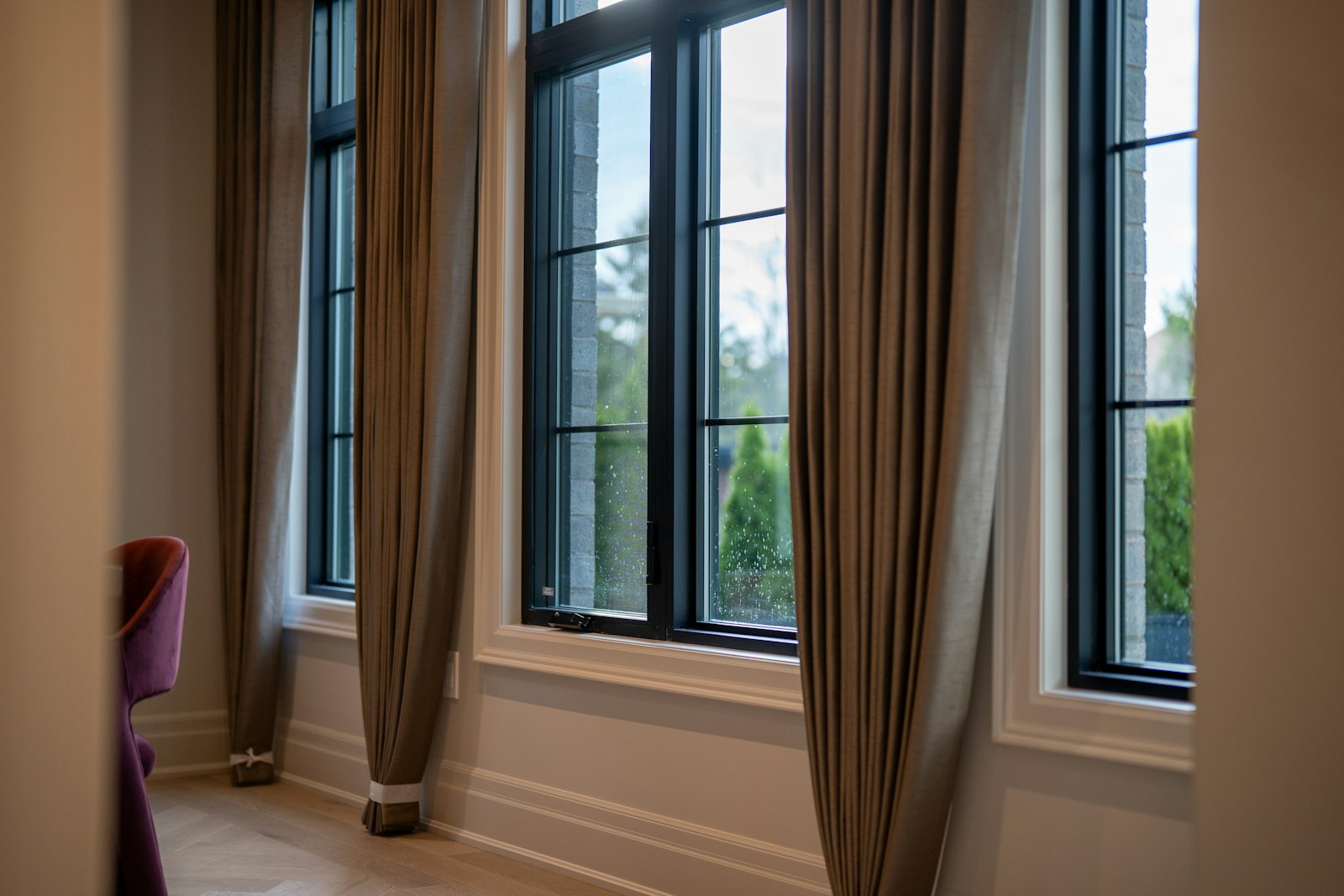
If you want to know how to hang curtains so your windows look bigger, the short answer is: mount the rod high and wide, choose panels full enough to look generous, and let them reach the floor. Those three moves get the eye to read the whole curtain as the window, so a modest window suddenly looks taller, wider and far more expensive.
Below are the exact measurements designers use, a quick checklist you can take shopping, and fixes for tricky cases like low ceilings, radiators and rentals where you can’t drill much.
Key takeaways
- Hang the rod well above the window frame: at least 4–6 inches, and ideally halfway to two-thirds of the way up to the ceiling.
- Extend the rod past the frame on each side so the open panels rest on the wall, not over the glass.
- Buy total fabric width of about 2 to 2.5 times the window width for a full, tailored look.
- Let curtains just touch the floor or float about ½ inch above it. Short curtains shrink a window.
- Choose the length after you fix the rod height, and measure from the rod (or ring) down to the floor.
Why hanging curtains high and wide makes windows look bigger
When a rod sits right on top of the window trim, the eye stops at the frame and the window looks exactly as small as it is. Lift the rod and push it outward, and the curtain becomes a tall, wide frame. The brain reads the fabric edges as the edges of the window.
There’s a practical win too. A wider rod lets the panels stack on the wall when open, so you get every bit of daylight instead of losing the outer few inches of glass behind fabric. That alone can make a room feel brighter, which is why this trick pairs so well with our tips to make a room look bigger.
How to hang curtains to make windows look bigger: 9 designer rules
1. Mount the rod high, not on the trim
A practical starting point is 4–6 inches above the top of the window trim. To make the window look taller, go higher: about halfway to two-thirds of the way from the top of the frame to the ceiling.
In rooms with standard ceilings, that often lands a few inches below the ceiling or crown molding. Leave enough space above the rod for the brackets and finials so nothing bumps the ceiling.
2. Extend the rod past the window on both sides
Retail guides usually recommend 3–6 inches of rod past the frame on each side, and many designers say at least 6 inches. If you want the window to look noticeably wider, go further, as long as the wall space allows.
The easy test: open the curtains fully and check that the stacked fabric covers wall, not glass. Thick lined panels stack wider than sheers, so they need a bit more rod.
3. Buy enough fabric for fullness
Skimpy panels stretched flat look cheap and make a window look smaller. For a full, luxurious drape, aim for total fabric width of about 2 to 2.5 times the width of the window (or the rod).
In a small room or with a very airy sheer, 1.5 times can be enough. Wide windows and sliding doors usually need more than two panels, so don’t be afraid to double up.
Worked example: a 36-inch window with 6 inches of rod on each side needs a 48-inch rod. At 2 to 2.5 times fullness, that’s roughly 96–120 inches of total panel width, so two 50-inch-wide panels would look full and generous.
4. Let the curtains reach the floor
Floor-length curtains draw the eye all the way down, which is what makes a window look tall. Curtains that stop well short of the floor cut the wall in half, so for the biggest-looking window, keep the gap small. A casual 2–3 inch float can work in relaxed spaces, but the closer to the floor, the taller the window reads.
Pick the hem style that suits your room:
| Hem style | Where it sits | Best for |
|---|---|---|
| Float | About ½ inch above the floor | Clean, tailored look; easy to clean; busy rooms |
| Kiss | Just touching the floor | Most living rooms and bedrooms |
| Puddle | 4–6 extra inches pooling on the floor | Formal, romantic rooms with little foot traffic |
| Sill or below-sill | At or just under the windowsill | Kitchens, or windows above a radiator or built-in seat |
Puddled curtains collect dust and get stepped on, so save them for low-traffic spaces like a formal dining room or a guest bedroom.
5. Choose the length after you set the rod height
This is where most people go wrong. They buy 84-inch panels first, then hang the rod wherever those panels reach the floor, which is usually right on top of the trim.
Do it the other way round: decide on the rod height, then measure from the rod down to the floor. Ready-made panels typically come in 63, 84, 96, 108 and 120 inches, and the most useful sizes for a “bigger window” look are 96 and 108. Round up to the next standard length and hem if needed.
Check how the panel hangs before you measure. Rings, clips, grommets and rod pockets all change where the fabric starts, so follow the manufacturer’s measuring guide.
6. Use rings or pleats for a custom look
Rod-pocket and back-tab curtains are casual and can be stiff to open. Clip rings, or pinch-pleat panels with hooks and rings, glide easily and fall in neat, even folds, which reads as custom drapery.
Budget tip: clip rings turn almost any flat panel into a pleated-looking drape. Premium option: made-to-measure pinch-pleat or ripple-fold curtains on a track.
7. Pick hardware that can carry the weight
A long, wide rod needs proper support. Heavy fabrics like velvet or blackout-lined panels call for a thicker rod and a center bracket so the rod doesn’t sag in the middle.
Screw brackets into studs or use the anchors recommended for your wall type. Match the rod finish to something else in the room, like a lamp base or cabinet pulls, so it looks planned.
8. Choose fabric for the light you want
Light-colored linen or sheer panels keep a room bright and let the window glow through, which helps a small space feel open. Lined or blackout panels work best in bedrooms, nurseries and media rooms.
For the strongest “taller window” effect, pick curtains close to your wall color. Low contrast lets the eye glide upward. A bold contrasting color looks dramatic but draws attention to the curtain itself.
9. Treat a row of windows as one
Two or three windows close together look grander under one long rod, with panels only at the outer ends and possibly between them. It turns a group of small windows into a single, wall-wide feature.
If a window sits off-center on its wall, an adjustable rod can extend a little more on the short side so the whole treatment looks balanced.
Step by step: how to measure and hang curtains
- Gather your tools: tape measure, pencil, level, drill, screws or anchors, rod, brackets and a helper.
- Prep the panels: wash or steam them first if the care label allows, so any shrinkage happens before you set the height.
- Mark the rod height: measure up from the window frame to your chosen height and make a light pencil mark above each corner.
- Mark the width: measure out from each side of the frame and mark the bracket positions. Use a level so both sides match.
- Test before drilling: have someone hold a panel at the mark. Step back, take a photo and check the length and proportions.
- Install the brackets: drill pilot holes, add anchors if you’re not hitting a stud, and screw the brackets in. Add a center bracket on long rods.
- Hang and dress the curtains: slide on the rings or panels, hang the rod, then “train” the folds by smoothing them into even pleats and tying them loosely for a day or two.
If your panels refuse to stay shut in the middle once they’re up, see our guide on how to keep curtains closed in the middle.
Quick checklist before you buy
- Rod height decided (and measured from the floor)?
- Rod width = window width + extra on each side for stacking?
- Total panel width about 2–2.5× the rod width?
- Panel length = rod (or ring) to floor, rounded up to a standard size?
- Hem style chosen: float, kiss or puddle?
- Center bracket for long rods or heavy fabric?
- Fabric chosen for privacy and light in that room?
Tricky windows and how to handle them
Low ceilings
Mount the rod as close to the ceiling as the hardware allows, or use a ceiling-mounted track. Floor-length panels in a color close to the walls will make the whole room feel taller, not just the window.
Very high ceilings
You don’t have to go all the way up. Halfway to two-thirds of the way between frame and ceiling usually looks best, and it keeps panel lengths to sizes you can buy off the shelf.
Radiators, window seats and furniture
If floor-length curtains would cover a radiator or catch on a seat, go for sill or just-below-sill panels, or a Roman shade mounted high above the frame. You still get extra height from the high mounting point.
Rentals with drilling limits
Check your lease first. Small screw holes are often easy to fill when you move out, but if drilling isn’t allowed, look for no-drill bracket systems that clip onto the window frame. Tension rods are another option, but they sit inside the frame, so you lose most of the “bigger window” effect. Our rental apartment decorating ideas include more renter-friendly upgrades.
Budget vs premium: what to spend on
| Element | Budget option | Premium option |
|---|---|---|
| Panels | Ready-made linen-look panels in 96″ or 108″, hemmed to length | Made-to-measure lined linen or velvet drapes |
| Heading | Flat panels with clip rings | Pinch pleat or ripple-fold |
| Hardware | Simple adjustable rod with a center bracket | Solid metal rod or ceiling track |
| Finishing | Steam and train the folds yourself | Professional installation and hemming |
If you only upgrade one thing, make it length. Long, generous panels on a basic rod look far more expensive than short designer curtains hung low. For more ways to stretch a small budget, see how to decorate a small space without clutter.
Common mistakes that make windows look smaller
- Mounting the rod directly on top of the trim.
- A rod that ends at the frame, so open curtains block the glass.
- “High-water” curtains that stop several inches above the floor (unless a casual float is the look you want).
- One thin panel per window stretched flat.
- Buying panels before measuring from the planned rod height.
For more detail on measuring, Havenly’s curtain-hanging guide and Crate & Barrel’s panel guide are both useful references. Once your curtains are up, good lamps finish the look, so pair this with our tips on fixing bad lighting at home.
FAQ
How high above the window should you hang curtains?
At least 4–6 inches above the window trim. To make the window look taller, mount the rod about halfway to two-thirds of the way between the top of the frame and the ceiling. In rooms with standard ceilings, that’s often a few inches below the ceiling.
How far should a curtain rod extend past the window?
Most guides recommend 3–6 inches on each side, and at least 6 inches if you want the window to look wider. The goal is for open curtains to rest on the wall rather than covering the glass.
Should curtains touch the floor?
In most rooms, yes. Curtains that just touch the floor or float about ½ inch above it look tailored and make windows look taller. Puddled curtains suit formal, low-traffic rooms, while sill-length panels work above radiators or window seats.
How wide should curtains be for a window?
For a full look, the combined width of your panels should be about 2 to 2.5 times the width of the rod. Lighter sheers or small rooms can get away with around 1.5 times.
What length curtains do I need for 8-foot ceilings?
Measure from your planned rod height to the floor rather than guessing. With the rod a few inches below an 8-foot (96-inch) ceiling, the drop is often around 90–93 inches, so 96-inch panels usually need hemming by a few inches unless you want a slight puddle. Check whether the rings add length before you hem.
The bottom line
Hanging curtains to make windows look bigger comes down to high, wide and long: lift the rod, extend it past the frame, buy generous panels and let them meet the floor. It’s one of the cheapest ways to make a room feel taller, brighter and more luxurious, whether you’re working with ready-made panels or custom drapes.