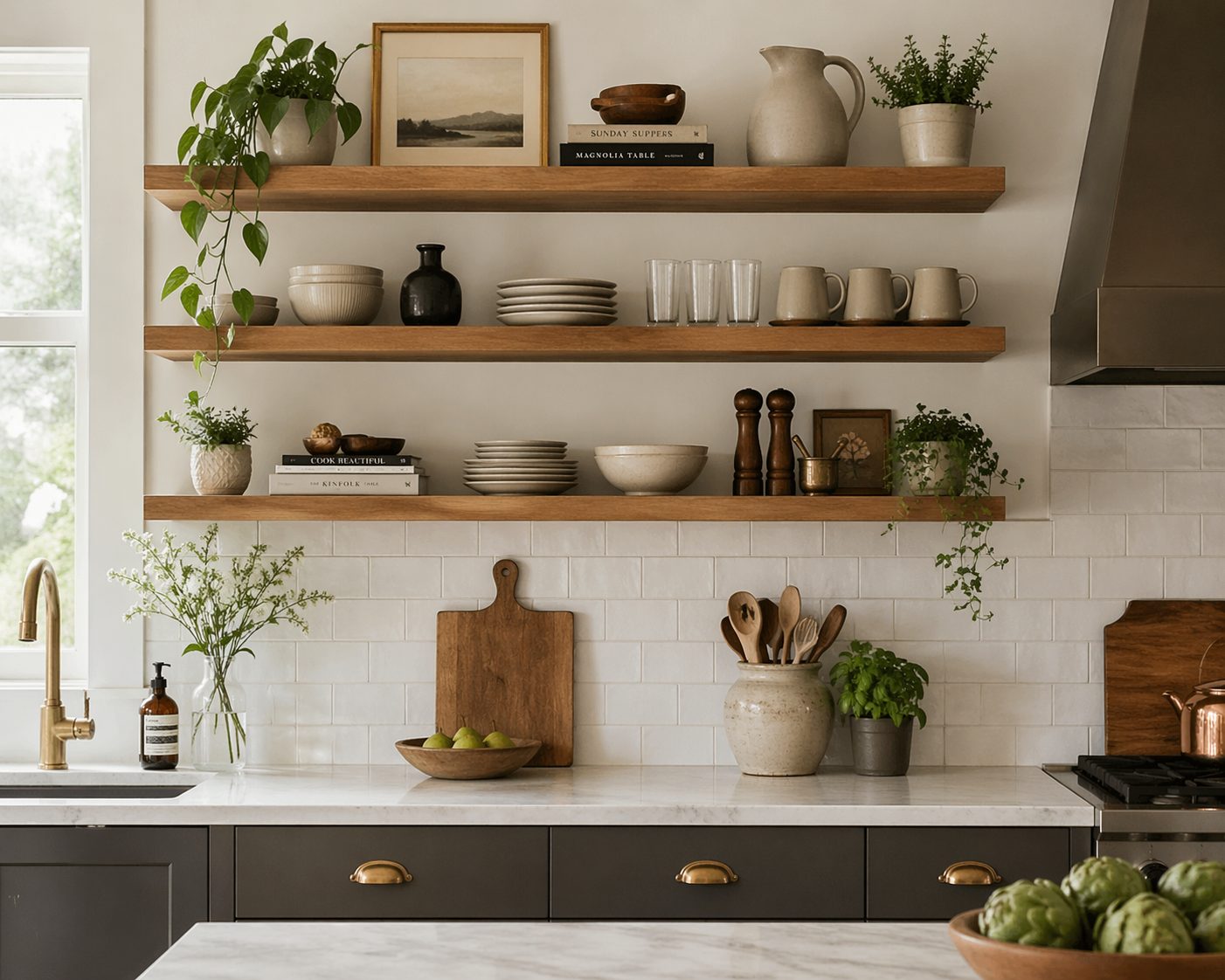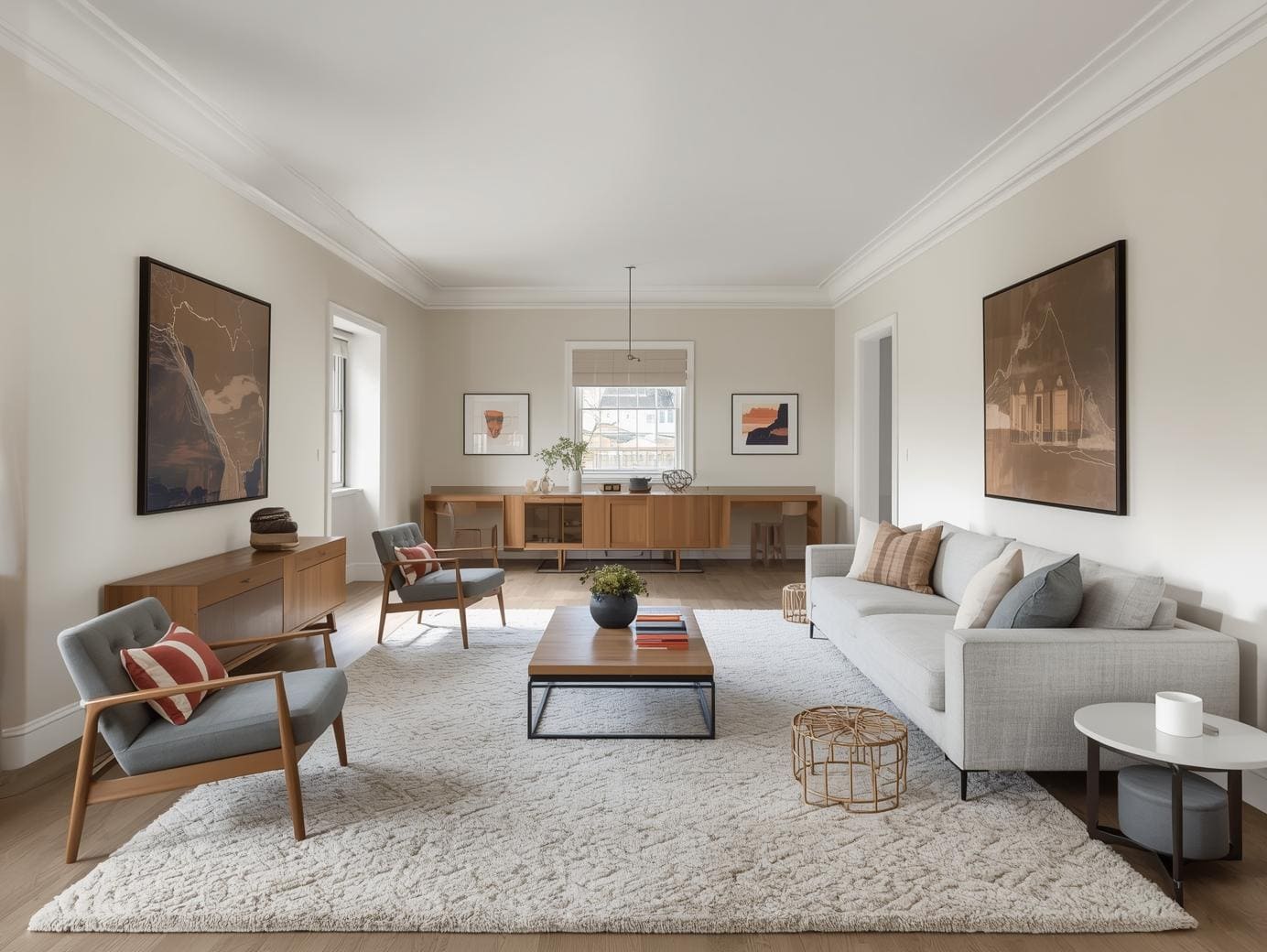
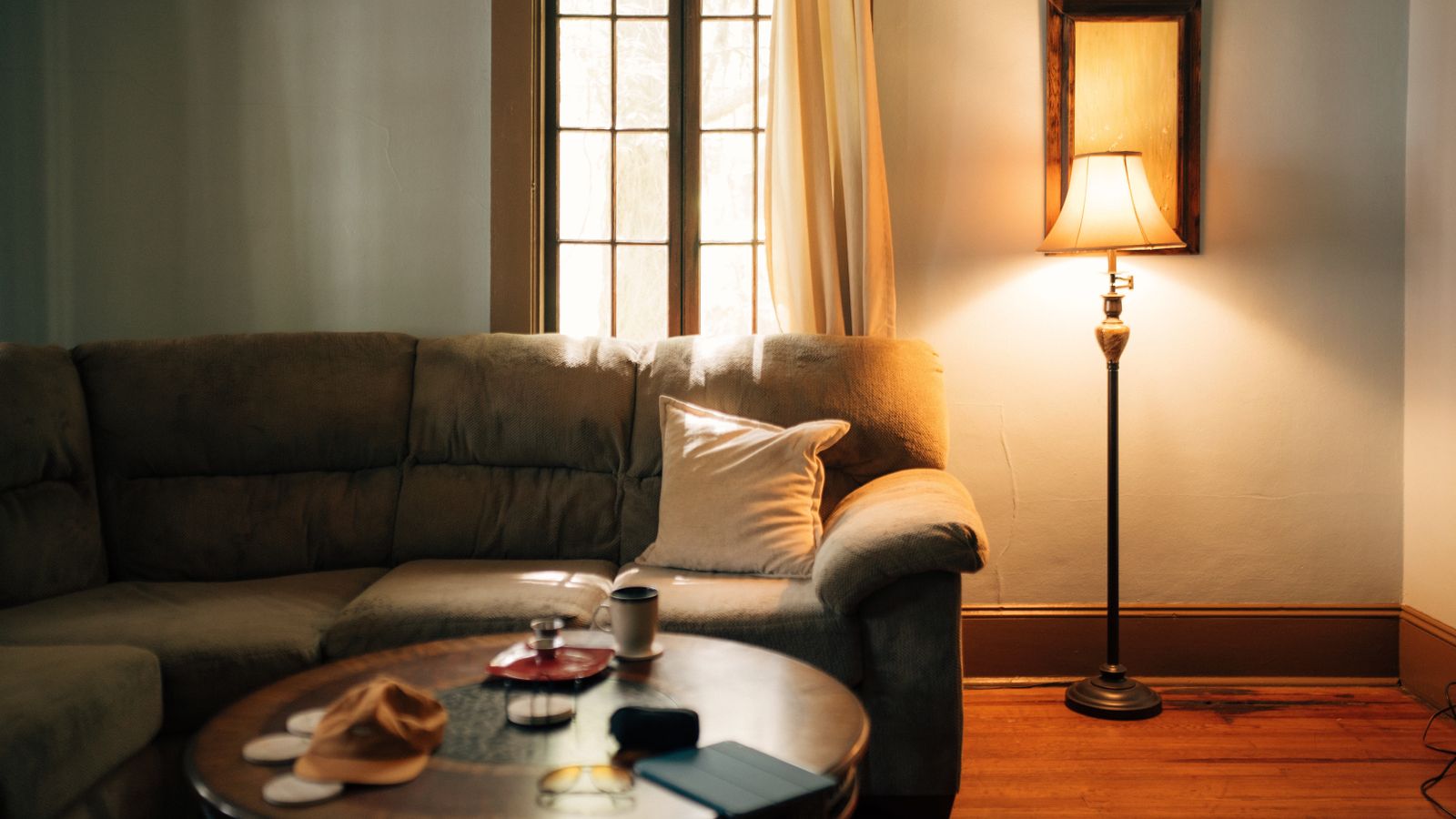
The best paint colors for a north-facing room are ones with warm undertones: creamy whites with a hint of yellow, soft beiges and greiges, gentle greens, and rich earthy shades used with confidence. North light is cool and even, so it pulls blue and gray out of any color you put on the walls. Choosing the right north facing room paint colors simply means picking shades that push back against that chill instead of adding to it.
Below you’ll find 20 tried-and-trusted shades (from easy warm whites to deep, dramatic colors), the shades to skip, and a simple way to test paint before you commit to a full gallon.
Why North-Facing Rooms Feel Cold (and What Paint Can Do)
In the Northern Hemisphere, a north-facing window never gets direct sun. The light that comes in is indirect, steady through the day and slightly blue. Benjamin Moore notes that northern light “can be muted and toned down,” and Farrow & Ball notes that it tends to bring out the cooler tones within a color.
That’s why a gray that looked soft and warm on a paint chip can turn steely on your wall. The good news: that steady light is also very predictable. Once you find a color that works in the morning, it will look much the same at 4 p.m.
Living south of the equator? Everything here flips. In Australia, New Zealand or South Africa, it’s your south-facing rooms that get the cool, indirect light, so use this guide for those.
Two ways to work with north light
- Brighten and warm it up: choose light colors with yellow, red or golden undertones so the walls bounce back as much soft light as possible.
- Embrace it: go deep and moody on purpose. Farrow & Ball suggests darker colors such as Railings or Down Pipe for a cozy, enveloping feel, especially in rooms you mostly use in the evening.
Both work. What rarely works is the in-between: a mid-tone cool gray that is too dark to brighten and too pale to feel intentional.
A Quick Note on LRV (Light Reflectance Value)
Every paint color has an LRV, a number from 0 (black) to 100 (pure white) that tells you how much light it reflects. You’ll find it on the color’s page on the brand’s website.
Color consultant Kylie M Interiors advises choosing shades with a higher LRV and/or a good degree of color (chroma) for north-facing rooms, because muted grayish colors can look dingy in low light. A high LRV can’t reflect light that isn’t there, though, so a dim room still needs good lamps (more on that below).
Best North Facing Room Paint Colors: Warm Whites
Stark, blue-based whites look gray and flat in north light. Choose whites with the slightest touch of yellow or cream instead.
- Benjamin Moore Simply White (OC-117), LRV 89.52: a bright white with “the slightest hint of warmth,” according to Benjamin Moore. A great pick if you want white walls that still read as white.
- Benjamin Moore White Dove (OC-17), LRV 83.16: softer than Simply White. Benjamin Moore itself recommends it for trim and ceilings in north-facing rooms.
- Sherwin-Williams Alabaster (SW 7008), LRV about 82: a creamy, cozy white that won’t go stark. Lovely in bedrooms.
- Benjamin Moore Timid White (OC-39): Benjamin Moore’s color team calls it “softer with creamier tones,” which helps counter cool northern light.
- Farrow & Ball New White: one of the yellow-based whites Farrow & Ball recommends to bounce light around a north-facing room.
Best Warm Neutrals, Beiges and Greiges
If you want a bit more color than white, warm neutrals are the safest bet. Look for beige, greige and taupe shades whose undertone leans yellow or pink rather than green-gray or blue.
- Benjamin Moore Pale Oak (OC-20), LRV 68.64: a soft, warm greige. It’s a favorite for open-plan living rooms because it stays neutral without turning icy.
- Benjamin Moore Navajo White (OC-95): a light cream that isn’t overly yellow. Good for whole-house color.
- Sherwin-Williams Vanillin (SW 6371): a committed cream that Kylie M Interiors notes can work in both brighter and darker north rooms.
- Benjamin Moore Balboa Mist (OC-27): a velvety greige that designers interviewed by Real Homes recommend for north-facing living rooms and bedrooms.
- Sherwin-Williams Accessible Beige (SW 7036), LRV 57.67: a cozy, warm beige. Its LRV is mid-range, so save it for a north room that still gets decent light.
Soft Greens, Blues and Pinks That Don’t Feel Chilly
Color is not off-limits in a north-facing room. The trick is choosing shades with a warm or green-leaning base instead of icy, pure blues.
- Benjamin Moore October Mist (1495): a soft gray-green that Benjamin Moore suggests for adding warmth and luminosity to a cool room. Pretty with terracotta and olive accents.
- Benjamin Moore Guilford Green (HC-116): a gentle green with yellow warmth that holds up in light or darker rooms.
- Benjamin Moore Wythe Blue (HC-143): a blue with a green-gray base, so it reads calm rather than cold.
- Farrow & Ball Setting Plaster: a dusty pink with a touch of yellow pigment. Farrow & Ball’s color team says that touch of yellow “adds a certain softness.”
- Benjamin Moore Hawthorne Yellow (HC-4): a buttery yellow that Benjamin Moore suggests for accent walls in darker spaces.
Rich and Moody Colors: Embrace the Shadows
If the room is small, dim or used mostly at night (a study, dining room, powder room or TV room), going dark can look far more luxurious than fighting the light with a pale color.
- Benjamin Moore Potters Clay (CC-360): a warm terracotta Benjamin Moore suggests for accent walls in darker spaces.
- Farrow & Ball India Yellow: a deep ochre that brings a feeling of sunshine into a cold room.
- Farrow & Ball Red Earth: a terracotta whose red base counters the blue cast of north light.
- Benjamin Moore Mortar (CC-574): a rich, enveloping shade Benjamin Moore recommends for smaller rooms with limited light, especially paired with lamps.
- Farrow & Ball Inchyra Blue: a deep, aged blue that shifts between gray, blue and green. It creates a dramatic, intimate room when you lean into the low light (Railings, a soft black, is the even bolder option).
Tip: when you go dark, paint the ceiling a lighter, warm shade of the same color family (or the same color at reduced strength). It keeps the room cozy without feeling like a cave.
Colors to Avoid in a North-Facing Room
| Skip this | Why it struggles in north light | Try this instead |
|---|---|---|
| Cool, blue-based grays | Look cold, flat and steely | Warm greige such as Pale Oak |
| Stark, bright “gallery” whites | Turn gray and lifeless | Simply White or White Dove |
| Icy, pure blues and lilacs | Northern light amplifies cool tones | Green-leaning blues such as Wythe Blue |
| Muddy browns and drab taupes | Absorb light and look dull | Terracotta or ochre with clear warmth |
| Mid-tone cool grays | Too dark to brighten, too pale to feel cozy | Go lighter and warmer, or go properly deep |
How to Test Paint Colors in a North-Facing Room
Paint chips lie, especially under store lighting. Before you buy gallons, run this quick test:
- Use large samples. Peel-and-stick sheets or sample pots painted on white foam board (two coats) give you a far truer read than a tiny chip.
- Move them around. Check each sample on the wall opposite the window and on the wall beside it, where the shadows are.
- Look at different times. View them in the morning, mid-afternoon and in the evening under your own lamps.
- Compare against white paper. Holding a plain sheet of printer paper next to the sample reveals its true undertone (yellow, pink, green or gray).
- Check with your fixed finishes. Floors, kitchen counters, tile and large furniture all affect how a color reads. If a warm paint clashes with them, the finishes win.
- Re-check in winter. Benjamin Moore points out that winter light is cooler and sharper than summer light, so the same paint can look warmer in July than in January.
Paint Finish and Lighting: The Other Half of the Fix
Choose the right sheen
Slightly shinier finishes reflect more light. Eggshell or satin on walls bounces a little more brightness than flat matte, and Benjamin Moore suggests semi-gloss or high-gloss on trim. Just remember that more sheen also shows wall imperfections more.
Pick warm bulbs
Your bulbs change your paint color every evening. According to the U.S. Department of Energy, bulbs around 2700–3000 K give warm light, while higher numbers look cooler and bluer. In a north-facing room, warm bulbs make warm paint glow; cool daylight bulbs can undo all your careful color choices.
Layer table lamps, floor lamps and wall lights rather than relying on a single ceiling fixture. Our guide to fixing bad lighting in your home walks through it step by step.
Bounce the light you have
A large mirror opposite or beside the window, light-colored curtains and pale rugs all spread daylight further into the room. These tricks pair nicely with the ideas in our post on how to make a room look bigger.
Budget vs Premium: Getting the Look for Less
- Budget: paint only the walls that matter most (often the wall facing the window), keep existing white trim if it’s warm, and spend on two or three warm bulbs. Many paint stores can color-match a shade into a more affordable product line, though the result may differ slightly from the original formula.
- Mid-range: walls in a warm neutral plus the ceiling in a warm white such as White Dove, and a large mirror to bounce light.
- Premium: color-drench the room (walls, trim and ceiling in one deep shade like Inchyra Blue or Red Earth), add wall lights on dimmers, and finish trim in a higher sheen for a soft glow.
Prices vary a lot by brand, retailer and region, so compare a few quotes or sample pots before deciding. For whole-home harmony, our living room color scheme guide helps you link the shade to the rest of your palette, and mixing textures adds warmth that paint alone can’t.
Key Takeaways
- The best north facing room paint colors have warm undertones (yellow, red or golden), because north light is cool and steady.
- Creamy whites like Simply White and White Dove beat stark, blue-based whites.
- Skip cool grays, icy blues and muddy browns; choose warm greige, green-leaning blues or terracotta instead.
- Dark, rich colors are a great choice for small rooms you mostly use in the evening.
- Always test large samples at different times of day, and use warm 2700–3000 K bulbs.
FAQ
What color makes a north-facing room brighter?
A light color with a warm undertone and a high LRV, such as a creamy white or soft warm neutral. Pair it with a slightly reflective finish and warm lamps, because paint can only reflect the light the room already has.
Should I paint a north-facing room white?
You can, but choose a warm white. Stark or blue-based whites often look gray and flat in north light, while whites with a hint of yellow or cream stay soft and bright.
Is gray a bad color for a north-facing room?
Cool, blue-based grays usually look cold there. Warm grays and greiges with beige or taupe undertones work much better, as long as the room gets reasonable light.
Can you use dark paint in a north-facing room?
Yes. Deep shades like terracotta, ochre, deep blue or soft black can make a north-facing room feel cozy and intentional. They work best in smaller rooms used mostly in the evening, with plenty of warm lamp light.
Which wall should I paint in a north-facing room?
If you’re only painting one, the wall opposite the window catches the most light and sets the mood. The window wall itself sits in shadow, so it will always read a little darker than the rest.
Final Thoughts
A north-facing room doesn’t have to feel gloomy. Lean warm rather than simply bright, test big samples through the day, and back the paint up with warm lighting. Whether you go creamy and airy or deep and cocooning, the right shade will make the room feel like it was designed that way on purpose. For more north-light guidance straight from a paint maker, see Benjamin Moore’s north-facing color picks (it also lists a few cooler grays; if you choose one, go light and pair it with warm bulbs).