
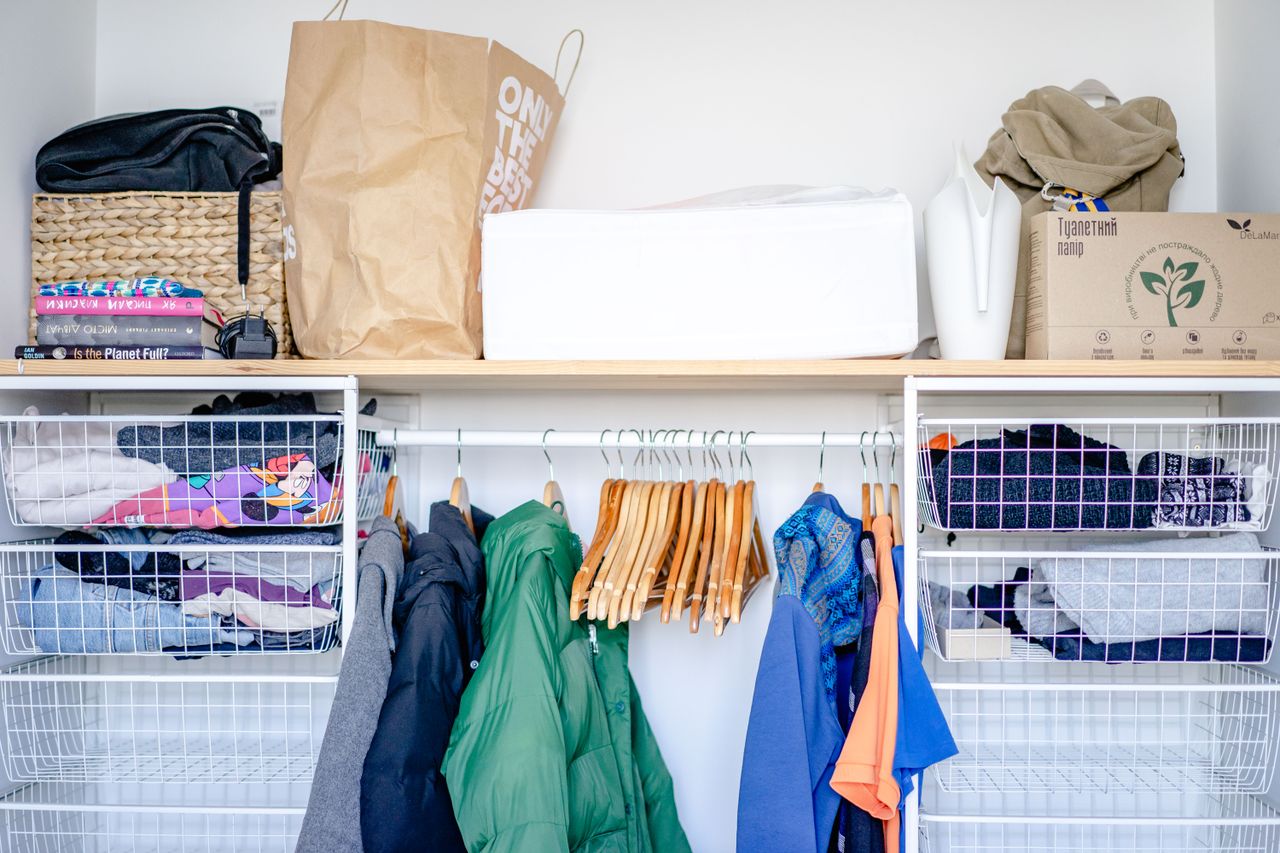
A mold smell in a closet almost always means one thing: moisture is getting trapped in a dark, still space. To get rid of it for good, find and fix the source of the damp, clean any mold off hard surfaces, wash or air out everything you store in there, then keep the closet dry and ventilated. Air fresheners and sachets only cover the smell; the steps below remove it.
This guide walks you through it in nine practical steps, with budget fixes and premium upgrades for keeping the space fresh afterward, so your closet can look (and smell) like the one in a boutique hotel.
Key Takeaways
- The smell is a symptom. No moisture, no mold, so the real fix is finding where the damp comes from.
- Aim for 30–50% humidity. The EPA recommends keeping indoor relative humidity below 60%, ideally in that range. A cheap hygrometer tells you where you stand.
- Detergent and water is enough for mold on hard surfaces. Never mix bleach with vinegar, ammonia or other cleaners.
- Airflow is the long-term cure: space out hangers, skip plastic covers and never put damp clothes away.
- Call a professional if the mold covers more than about 10 square feet, keeps coming back or follows a leak or flood.
What Causes a Mold Smell in a Closet?
That earthy, damp-basement smell comes from gases that mold and mildew give off as they grow. Closets are the perfect setting for them: little light, almost no air movement and a lot of fabric that holds on to moisture. These are the usual culprits:
- High humidity. Humid climates, summers without air conditioning and homes with poor ventilation all let moisture build up in closed spaces.
- Clothes put away damp. Gym gear, towels, a coat that got caught in the rain or laundry that isn’t quite dry adds moisture every time the door closes.
- A cold exterior wall. If the closet sits on an outside wall, warm indoor air can condense on the cold surface behind your clothes, especially in winter. The back corner is often where the smell is strongest.
- A hidden leak. A closet that shares a wall with a bathroom or kitchen, or sits under a roof or an upstairs bathroom, can be soaking up water you can’t see.
- Overstuffing. Clothes packed tightly, bags piled on the floor and boxes pushed against the walls stop air from moving at all.
If you’ve noticed the same smell in a rug or carpet nearby, the cause is often the same. Our guide on how to get rid of a musty smell in a rug covers that side of the problem.
Musty Smell or Visible Mold? A Quick Check
Before you start, take everything out and look closely with a flashlight: the back wall, corners, the ceiling, the floor, shelves and the back of the door. Then use this table to decide how big the job is.
| What you find | What it likely means | What to do |
|---|---|---|
| Smell only, no spots, clothes feel fine | Trapped humidity and stale air | Air out, wash clothes, lower humidity (steps 1, 5, 6, 7) |
| Small gray, black or green spots on walls or shelves | Surface mold from condensation or damp storage | Clean safely and dry (all 9 steps) |
| Spots on clothes, shoes or bags | Mold has reached fabric or leather | Wash, clean or replace items (step 6) |
| Bubbling paint, soft drywall, water stains | A leak inside the wall or ceiling | Fix the leak first; call a plumber or roofer |
| Mold patch larger than about 10 sq ft, or smell returns after cleaning | A bigger moisture problem, possibly hidden | Call a mold remediation professional (step 9) |
How to Get Rid of Mold Smell in a Closet: 9 Steps
1. Find the moisture source first
Cleaning without fixing the cause means the smell comes back within weeks. Put a digital hygrometer (an inexpensive humidity meter) on a shelf for a day or two; readings that sit above 60% point to a humidity problem.
Then check for leaks: stains or bubbling paint on the ceiling, damp patches on a wall shared with a bathroom, or a cold, wet-feeling exterior wall. Any active leak needs a plumber or roofer before anything else. Renters should report it to the landlord in writing.
2. Protect yourself and open everything up
Disturbing mold releases spores, so wear gloves, goggles and an N-95 respirator while you work; the EPA recommends this kit for mold cleanup. Open a nearby window and put a fan in it blowing outward so air leaves the room instead of spreading through the house.
3. Empty the closet and sort what you find
Take out every item, including what’s on the floor and top shelf, and sort it into three piles as you go:
- Washable: most clothes, linens and fabric storage bins.
- Needs special care: leather, suede, wool coats, silk and anything labeled dry clean only.
- Let go: moldy cardboard boxes, paper bags and anything porous with visible growth that can’t be cleaned. The EPA notes that absorbent materials may need to be thrown away once they become moldy.
Carry visibly moldy items out in a sealed bag so you don’t spread spores through the house.
4. Clean the walls, shelves and rods
For mold on hard surfaces, the EPA’s advice is simple: scrub it off with detergent and water, then dry completely. Lightly mist the area first so spores don’t fly up, scrub with a soft brush or sponge, wipe with a clean damp cloth and finish with a dry towel. Don’t forget the top of the door frame, the closet rod and the underside of shelves.
If the closet is carpeted, vacuum it thoroughly and let it dry. Carpet that stays damp or shows growth may need replacing, since the EPA notes moldy carpet may have to be thrown away.
If you choose bleach for a stubborn stain, the CDC says to use no more than 1 cup of household bleach per gallon of water and to never mix it with ammonia or any other cleaner. Don’t use bleach and vinegar on the same surface either, because the combination releases toxic chlorine gas. In most closets you won’t need bleach at all; detergent and water does the job without the fumes.
5. Dry the space fast and fully
Leave the closet empty with the door wide open and a fan or dehumidifier running nearby until every surface is bone dry. The EPA recommends drying water-damaged areas within 24 to 48 hours to prevent mold growth, so don’t rush clothes back in the same afternoon.
If your AC hasn’t been keeping the house cool and dry lately, that can be part of the problem; see our guide to fixing an AC blowing hot air.
6. Refresh your clothes, shoes and bags
Fabric holds the smell even after the closet is clean. Wash washable items at the warmest temperature the care label allows, and dry them completely, ideally outside in the sun and fresh air. Hang wool coats and knits outdoors on a dry day before deciding whether they need professional cleaning.
Wipe leather shoes and bags with a cloth dampened in mild soapy water, let them air dry away from direct heat, then condition the leather. For designer pieces, suede or anything with visible growth, a specialist cleaner is the safer choice.
7. Absorb the odor that’s left
Once the source is fixed, a lingering smell usually fades with good airflow. To speed it up, place an open container of baking soda or a few bags of activated charcoal on a shelf, and swap them out regularly. Rechargeable silica gel moisture absorbers do double duty, pulling damp from the air as well. Hanging calcium chloride absorbers work too, but replace them before they’re full, because a full one can leak onto clothes.
These products absorb odor and a little moisture; they don’t kill mold or fix a leak. If the smell returns within a few weeks, go back to step 1.
8. Repaint only once it’s clean and dry
A fresh coat of paint makes a closet feel brand new, but timing matters. The EPA warns against painting or caulking over moldy surfaces, because the paint is likely to peel. Clean, let the wall dry fully, then use a paint with a mildew-resistant formula; a light, warm white also makes the closet brighter, so you’ll spot problems sooner.
9. Know when to call a professional
The EPA says you can usually handle mold yourself when the patch is smaller than about 10 square feet (roughly 3 ft by 3 ft). Call a mold remediation specialist if:
- The mold covers a larger area or keeps returning after cleaning.
- The smell is strong but you can’t find any mold (it may be inside the wall).
- The closet was affected by a leak, flood or sewage water.
- Anyone in the home has asthma, allergies or a weakened immune system; check with a doctor before doing the cleanup yourself.
How to Keep Your Closet Smelling Fresh: Budget vs Premium
Prevention is mostly about three things: dry air, moving air and breathable storage. Pick the level that suits your home and budget.
| Goal | Budget fix | Premium upgrade |
|---|---|---|
| Control humidity | Digital hygrometer plus rechargeable silica gel absorbers | Compact dehumidifier near the closet, or a whole-home dehumidifier |
| Move the air | Leave the door ajar overnight; keep a finger’s width between hangers | Louvered doors, a door vent or a small exhaust fan in a windowless walk-in |
| Breathable storage | Cotton garment bags and fabric bins instead of plastic | Wire or slatted shelving, cedar-lined drawers or a cedar closet lining |
| Light and visibility | Battery LED puck lights so you see spots early | A hardwired closet light with a door switch |
| Exterior-wall closets | Leave a small gap between storage and the back wall | Have the wall insulated to reduce condensation |
A few habits matter just as much as any product:
- Never put away anything damp, including clothes that aren’t fully dry at thick seams and waistbands.
- Remove plastic dry-cleaner bags as soon as you get home; they trap moisture against fabric.
- Keep the closet floor clear so air can circulate underneath.
- Edit your wardrobe each season. A closet with breathing room looks more luxurious, too; our tips on minimalist design apply to closets as much as living rooms.
- Run the bathroom exhaust fan during and after showers if your closet is next to the bathroom. Smart bathroom organization keeps damp towels from ending up in the bedroom closet, too.
A note for renters
You can handle surface cleaning, absorbers, a portable dehumidifier and better storage yourself, and take them with you when you move. Leaks, recurring mold and anything inside the walls are the landlord’s responsibility in many places, so report them in writing and keep photos. For more renter-friendly upgrades, see our rental apartment decorating ideas.
FAQ
Is a mold smell in a closet dangerous?
The smell itself is a warning sign rather than the problem, but it means mold or mildew is growing somewhere. According to the EPA, mold can cause allergic reactions and irritation and can trigger asthma attacks in people with asthma, so it’s worth dealing with promptly rather than masking it.
Why does my closet smell musty when I can’t see any mold?
Often it’s mildew in the fabric of clothes that were stored damp, or simply humid, stale air. Mold can also grow where you can’t see it, such as behind boxes, under shelves or inside a wall with a slow leak. If washing everything and lowering the humidity doesn’t help, have the wall checked.
Will a dehumidifier get rid of the mold smell?
A dehumidifier stops the conditions that let mold grow, which is why it’s one of the best long-term fixes. It won’t remove mold that’s already there or the smell trapped in clothes, so clean and wash first, then use the dehumidifier to keep humidity in the 30–50% range.
Can I use vinegar instead of bleach?
White vinegar is a popular home remedy for small patches, though the EPA’s guidance calls for detergent and water on hard surfaces, and you don’t need bleach for routine closet mold. Whichever you pick, use only one product, never mix vinegar or ammonia with bleach, and dry the surface thoroughly afterward.
Do cedar blocks or air fresheners fix a musty closet?
Cedar and scented sachets make a clean closet smell lovely, but they only mask a musty odor. Use them as the finishing touch after the moisture problem is solved, not as the solution.
A Fresh Closet Is a Luxury Closet
Getting rid of a mold smell in a closet comes down to a clear order: find the moisture, clean safely, dry completely, refresh what you store and keep the air moving. Do that once, properly, and the reward is a closet that smells like clean linen every time you open the door.
For more official guidance, read the EPA’s Brief Guide to Mold, Moisture and Your Home and its advice on mold cleanup in your home.