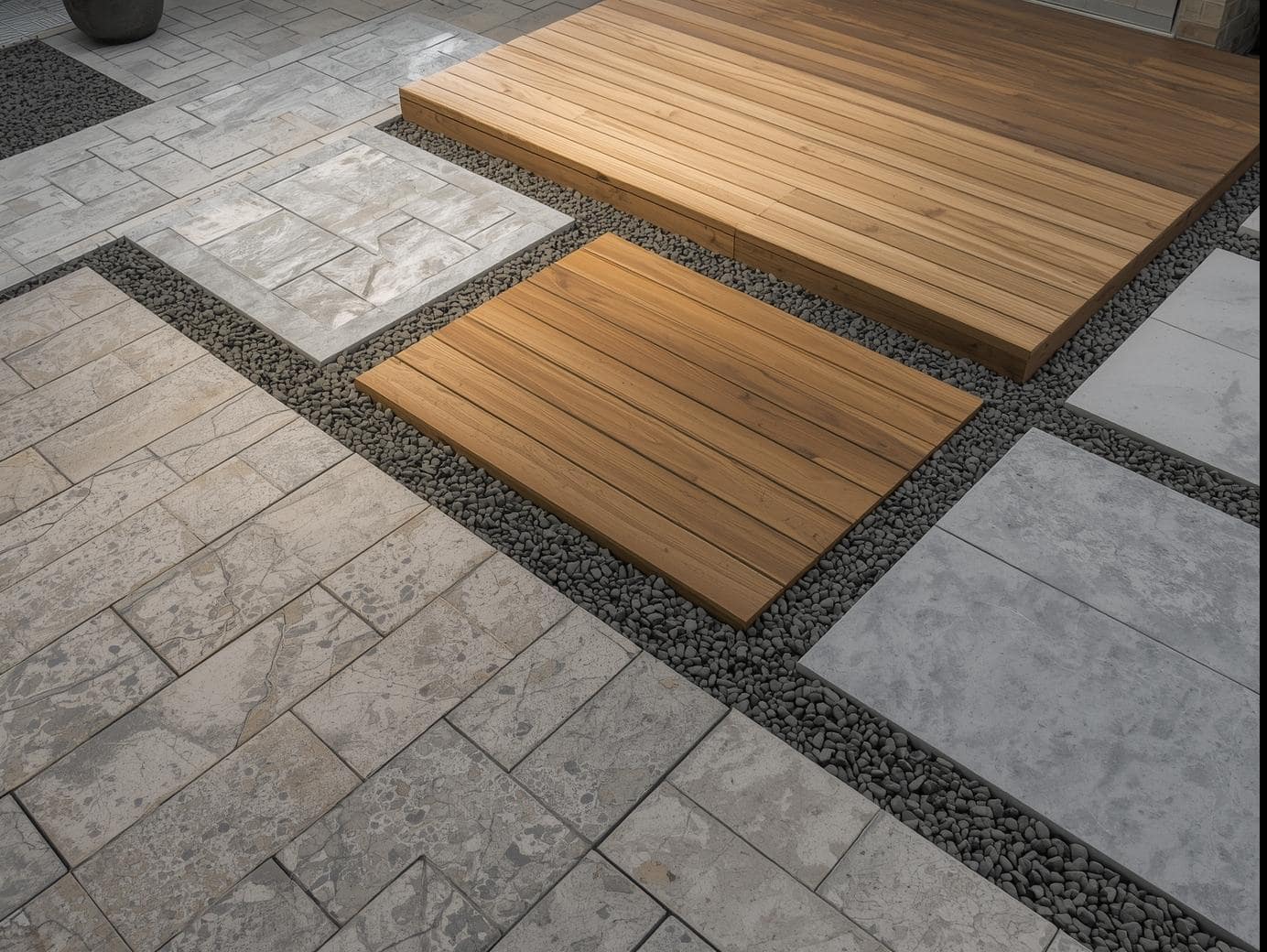
The best outdoor flooring for decks and patios depends on three things: what sits underneath (a raised frame, bare soil or an existing slab), your climate, and how much upkeep you are willing to do. For a raised deck, composite or PVC boards give the look of wood with the least maintenance, while pressure-treated wood is the cheapest. For a ground-level patio, poured concrete is the budget pick, pavers and brick are the most repairable, and natural stone or outdoor porcelain pavers deliver the most luxurious finish.
Below you will find the 10 most practical outdoor flooring options, a side-by-side comparison table, typical cost ranges, the best choice for each situation (hot sun, freeze-thaw winters, pools, balconies, rentals) and a quick checklist to help you decide before you buy.
Outdoor Flooring for Decks and Patios at a Glance
Patio cost ranges below are typical prices per square foot from a 2026 US patio cost guide, while deck figures are material-only (professional labor often adds roughly $15–$35 per square foot, according to NerdWallet); local prices vary a lot with labor rates, site prep and the specific product, so treat them as a starting point for quotes, not a final budget.
| Material | Best for | Typical cost (per sq ft) | Lifespan | Maintenance | Watch out for |
|---|---|---|---|---|---|
| Pressure-treated wood | Raised decks on a budget | $3–$8 material | Shortest; depends on upkeep | High: seal or stain every 2–3 years | Splinters, rot, warping |
| Cedar / hardwood (ipe) | Natural, upscale decks | $4–$20 material | Long if maintained (ipe very long) | Medium to high | Cost; hardwoods are heavy to work |
| Composite decking | Low-maintenance decks | $5–$20 material | Decades | Low: wash once or twice a year | Heat in full sun, higher upfront cost |
| PVC decking | Pools, docks, humid climates | $5–$13 material | Decades | Very low | Can feel less like wood; expands with heat |
| Poured concrete | Budget patios, modern style | About $4–$10 | Decades | Low: reseal decorative finishes | Cracking, hard to repair invisibly |
| Stamped concrete | Stone look for less | About $8–$25 | Decades | Medium: reseal every few years | Slippery if sealed glossy |
| Concrete pavers | Repairable, classic patios | About $8–$25 | Decades; units replaceable | Low to medium: re-sand joints, weed | Settling if the base is poor |
| Brick pavers | Traditional and cottage patios | About $9–$21 | Decades | Low: weed joints, clear moss | Use paving-grade brick in cold climates |
| Natural stone (flagstone, slate, travertine) | Luxury patios, pool decks | About $8–$35 | Among the longest | Medium: seal porous stone | Price, uneven pieces, some get slick |
| Outdoor porcelain pavers | Modern indoor-outdoor look | Varies by product; get quotes | Decades | Very low | Must be exterior-rated with a textured finish |
| Gravel | Casual patios, paths, drainage | About $2–$7 | Ongoing top-ups | Medium: rake and top up | Hard for chairs and heels |
| Interlocking deck tiles | Balconies, rentals, over old concrete | Low to medium | Short to medium | Low | Not a structural surface |
| Artificial turf | Rooftops, play areas | Medium | Medium | Low: rinse and brush | Gets hot, not eco-friendly |
Best Outdoor Flooring for Decks
A deck is a raised frame, so the flooring has to be a board or tile that spans joists and lets water drain through. These are your main choices.
1. Wood Decking: Timeless and Warm
Nothing quite matches the charm of natural wood. It brings warmth, texture and a classic look that feels inviting, and it stays cooler underfoot than most composites.
- Best for: Traditional decks, cozy patios, natural or rustic designs.
- Popular types: Pressure-treated pine (cheapest), cedar and redwood (naturally rot-resistant, lighter), tropical hardwoods like ipe (very dense and long-lasting), and thermally modified wood (heat-treated for better stability without chemicals).
- Pros: Classic appearance, comfortable underfoot, can be sanded and re-stained in new shades.
- Cons: High maintenance; it must be sealed or stained and can rot, splinter or attract insects without care.
- Pro tip: Choose sustainably sourced wood (look for FSC certification) and plan a cleaning and sealing schedule every 2–3 years to keep it looking its best.
2. Composite Decking: Low-Maintenance Beauty
If you love the look of wood but dread the upkeep, composite is your hero. Made from recycled wood fibers and plastics, most modern boards are “capped” with a protective plastic shell that resists stains and fading.
- Best for: Busy homeowners, families, low-maintenance outdoor living.
- Pros: Fade-resistant, won’t splinter, never needs staining, comes in a wide range of colors and wood-grain textures.
- Cons: Higher initial investment than pressure-treated wood; surfaces can get hot under strong sun, and it can’t be refinished if deeply scratched.
- Pro tip: Choose lighter shades if your deck gets lots of sun, as darker boards absorb more heat. Check the manufacturer’s joist-spacing and gapping rules, which are stricter than for wood.
3. PVC Decking: Best Near Pools and Water
PVC (cellular vinyl) boards contain no wood fiber at all, so they won’t rot or soak up water, and any surface mildew simply washes off. That makes them a favorite for pool surrounds, docks and humid coastal climates.
- Best for: Pool decks, waterfront homes, shaded or damp yards.
- Pros: Lightweight, very low maintenance, resistant to moisture, stains and insects.
- Cons: Often priced in the same range as mid-to-premium composite, expands and contracts with temperature, and looks less like real wood.
- Pro tip: Follow the manufacturer’s end-gap guidance exactly; thermal movement is the most common installation mistake with PVC.
Best Outdoor Flooring for Patios
A patio sits on the ground, so it needs a solid, well-drained base: compacted gravel for pavers and stone, or a concrete slab. Get the base right and almost any of these materials will last for decades.
4. Concrete: Modern and Versatile
Concrete has come a long way from plain gray slabs. Today, stamped, stained, exposed-aggregate and broom-finished concrete can be customized to suit nearly any style, and stamped concrete can mimic stone or brick for less.
- Best for: Modern patios, budget-friendly outdoor spaces, high-traffic areas.
- Pros: Extremely durable, affordable per square foot, versatile finishes.
- Cons: Can crack over time, cracks are hard to repair invisibly, and decorative finishes need resealing.
- Pro tip: Ask for a broom or textured finish (or add an anti-slip additive to the sealer) so it doesn’t get slippery when wet, and make sure control joints are planned in.
5. Pavers: The Most Repairable Patio Floor
Concrete pavers come in endless shapes, sizes and colors, from large-format slabs to cobble looks. Because each unit is separate, a stained or cracked paver can be lifted and replaced without redoing the whole patio.
- Best for: Family patios, cold climates, DIY-friendly projects.
- Pros: Flexes with freeze-thaw movement instead of cracking, easy spot repairs, great design range.
- Cons: Weeds and ants in joints, can settle unevenly if the base is poorly compacted.
- Pro tip: Use polymeric sand in the joints; it hardens to lock pavers together and discourages weeds. See our hardscape designs for a small backyard for layout ideas.
6. Natural Stone: Elegant and Lasting
If you want a patio that feels luxurious and timeless, natural stone is hard to beat. From flagstone and bluestone to slate and travertine, no two pieces are alike.
- Best for: Upscale patios, pool decks, Mediterranean or rustic outdoor spaces.
- Pros: Unique look, highly durable, adds real value and character.
- Cons: Costly, labor-intensive to install, porous stones need sealing, and polished stone gets slippery.
- Pro tip: For pool decks and sunny spots, light-colored travertine stays noticeably cooler underfoot than dark slate. Choose tumbled, honed or flamed finishes for better grip.
7. Outdoor Porcelain Pavers and Tile: Stylish and Customizable
Tile isn’t just for kitchens and bathrooms. Thick outdoor porcelain pavers (often 2 cm, or about 3/4 inch) are one of the fastest-growing patio choices because they look like stone or wood but barely absorb water.
- Best for: Modern patios, indoor-outdoor flow, covered terraces and rooftops.
- Pros: Very low water absorption (true porcelain absorbs 0.5% or less), stain- and fade-resistant, no sealing needed, can be laid on gravel, sand or pedestals.
- Cons: Thin indoor tiles crack outdoors, and smooth finishes are slippery when wet.
- Pro tip: Only buy tiles the manufacturer rates for exterior use, with a textured or “grip” finish and a slip-resistance rating for wet outdoor areas, such as R11 or higher, or an ANSI A326.3 “exterior wet” classification.
8. Brick: Classic and Charming
Brick adds a timeless, cozy vibe to patios and walkways. Its earthy tones and textures, laid in herringbone or basketweave, create a sense of tradition and charm.
- Best for: Traditional homes, cottage-style gardens, vintage-inspired patios.
- Pros: Durable, naturally slip-resistant, colorfast, timeless look.
- Cons: Prone to moss in damp shady areas; use paving-grade brick, as wall brick can flake in freezing weather.
- Pro tip: Pair brick with modern outdoor furniture for a fresh, updated contrast.
9. Gravel: Affordable and Flexible
Gravel is the cheapest way to create a patio, and pea gravel or decomposed granite can look surprisingly chic in casual, European-style gardens.
- Best for: Informal patios, fire-pit areas, garden paths or temporary spaces.
- Pros: Inexpensive, fast to install, excellent drainage.
- Cons: Not ideal for heavy furniture or heels, needs regular raking and topping up.
- Pro tip: Lay landscape fabric and a stabilizing grid underneath, and add a steel or stone edge, to reduce shifting and keep stones in place.
10. Interlocking Deck Tiles and Artificial Turf: Quick Upgrades
Snap-together deck tiles (wood, composite or porcelain on a plastic base) and artificial turf can be laid over an existing slab, balcony or rooftop in an afternoon, with no tools or contractor.
- Best for: Balconies, rooftop decks, renters and covering a tired concrete patio.
- Pros: Low cost, removable, soft underfoot (turf), always green.
- Cons: Turf and dark tiles retain heat; neither replaces a proper structural surface, and turf is not as eco-friendly as real grass.
- Pro tip: Combine turf with pavers for a chic, modern pattern. For more renter-friendly ideas, see our small balcony ideas and rental apartment decorating ideas.
Best Outdoor Flooring for Your Situation
- Cheapest outdoor flooring: Gravel for patios, pressure-treated wood for decks, and poured concrete if you want a solid hard surface.
- Lowest maintenance: Outdoor porcelain pavers for patios; PVC or capped composite for decks.
- Hot, sunny climates: Light-colored stone, porcelain or concrete stay cooler than dark composite or turf. Add shade with a pergola or umbrella.
- Cold, freeze-thaw winters: Pavers and paving-grade brick flex rather than crack; avoid thin tile and choose dense stone like granite or bluestone.
- Wet or rainy areas: PVC decking, porcelain and textured stone resist moisture best. Our guide to outdoor living materials for wet weather goes deeper.
- Around a pool: Textured travertine, porcelain with a grip finish, or PVC decking: cool, slip-resistant and water-tolerant.
- Over an existing concrete patio: Interlocking deck tiles, porcelain pavers on pedestals, or thin stone set in mortar (if the slab is sound and not cracked).
How to Choose the Right Outdoor Flooring: A Quick Checklist
- Surface: Is it a raised deck, bare ground, an existing slab or a balcony with weight limits? This narrows your options first.
- Climate: Freeze-thaw areas need flexible or very dense materials; sunny regions need light, heat-reflective colors.
- Safety: Pick textured, slip-resistant finishes for anywhere that gets wet, especially steps and pool edges.
- Budget: From gravel to stone, prices vary widely. Compare the lifetime cost (installation plus years of sealing and repairs), not just the price per square foot.
- Maintenance: How much time will you really spend? Low-maintenance options save effort and money long-term.
- Style: Match your home’s architecture and interior floors; continuing a similar tone from inside to outside makes both spaces feel bigger.
- Rules: Check local permit requirements for new decks and any HOA or landlord rules before you start.
Remember: your outdoor flooring isn’t just about durability; it’s the stage where life happens. BBQ nights, birthday parties, morning coffee or quiet sunsets: the right choice makes every moment more special. Once the floor is chosen, our guide on how to create a cozy outdoor living room will help you furnish it.
Conclusion
Choosing the right outdoor flooring is one of the most important decisions you can make when designing a patio or deck. It affects the look, comfort, safety and lifespan of your outdoor space. For most homeowners, composite or PVC is the easy answer for decks, pavers or concrete are the best value for patios, and natural stone or porcelain pavers are the upgrade that makes an outdoor space feel truly luxurious.
Ready to explore more outdoor living ideas? Dive into our Outdoor Living Topics for expert guides, inspiration and tips to transform your patio, deck or backyard into a dream space.
FAQ
What is the best outdoor flooring for a patio?
For most patios, concrete pavers offer the best balance of cost, durability and easy repairs. Poured concrete is the budget choice, while natural stone and outdoor porcelain pavers are the premium options with the most luxurious look.
What is the cheapest outdoor flooring option?
Gravel is generally the most budget-friendly patio surface, followed by plain poured concrete. For a raised deck, pressure-treated wood is usually the least expensive board.
What is the most durable outdoor flooring?
Dense natural stone (such as granite or bluestone), well-installed pavers, concrete and outdoor porcelain can all last for decades. For decks, capped composite and PVC resist rot and insects far longer than untreated wood.
Which outdoor flooring is best for low maintenance?
Outdoor porcelain pavers need no sealing and resist stains, making them the lowest-maintenance patio floor. On decks, PVC and capped composite boards only need an occasional wash.
Can I put tile on my outdoor patio?
Yes, but only tiles rated by the manufacturer for exterior use, ideally thick porcelain pavers with a textured finish. Thin indoor tiles can crack in freeze-thaw weather and become slippery when wet.
How do I make outdoor flooring less slippery?
Choose textured finishes such as broom-finished concrete, tumbled or flamed stone and grip-finish porcelain. You can also add an anti-slip additive to sealers, keep surfaces clean of moss and algae, and use outdoor rugs in busy spots.