
Introduction
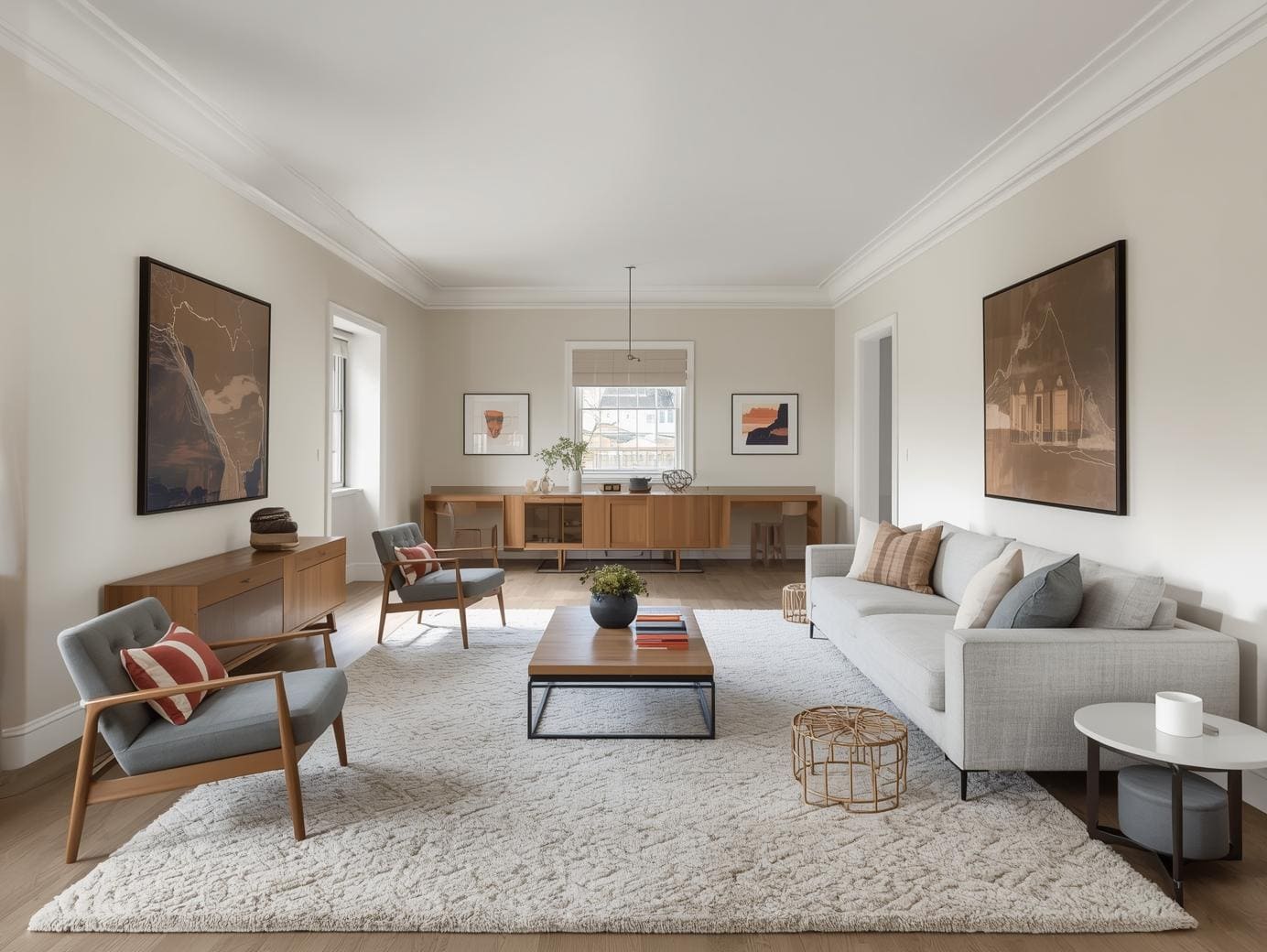
how to arrange furniture in a long narrow living room ? You walk into your living room and the first word that comes to mind is tunnel. The sofa is hugging the wall, the TV sits at one end, and the whole space feels less like a cozy retreat and more like a bowling alley waiting for the balls to roll in.
You are not alone. Long narrow living rooms, typically between 10 and 14 feet wide and 20 to 30 feet long, are among the most common and most challenging layouts found in colonial homes, apartments, and open-plan houses alike. Most homeowners make the same three mistakes: they push everything against the walls, they treat the space as one giant zone, and they ignore traffic flow entirely.
The result? A room that looks awkward, feels cramped, and never quite works.
The good news is that with the right furniture arrangement strategy, a long narrow living room can become one of the most functional and stylish spaces in your home. In this guide, you will find nine proven layout approaches, each paired with a floor plan concept.. so you can visualize exactly how to transform your space before moving a single piece of furniture.
Whether you are dealing with a fireplace at one end, an open-concept layout, or a room that doubles as a hallway, there is a solution here for you.
Before You Start: Measure First, Arrange Second
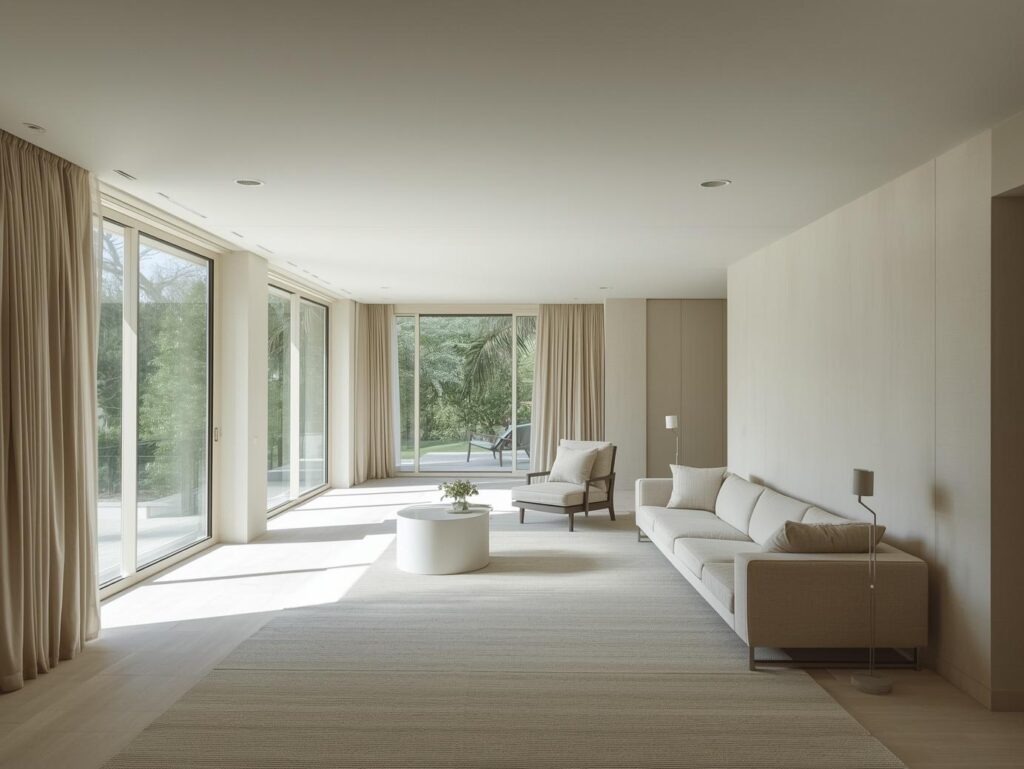
The single most important step before rearranging your living room is grabbing a tape measure. Write down the room’s length, width, ceiling height, and note every obstacle: doorways, windows, radiators, built-ins, and light switches.
Key spacing rules to keep in your back pocket:
- Allow at least 36 inches for main walkways (this is the minimum comfortable passage)
- Keep 14 to 18 inches between your sofa and coffee table
- Seating should be no more than 8 feet apart for comfortable conversation
- TV viewing distance should be roughly 1.5 to 2.5 times the screen’s diagonal measurement
Once you have your measurements, sketch the room on grid paper (1 square = 1 foot) or use a free tool like Roomstyler or IKEA’s planning app. Moving paper furniture costs nothing. Moving real furniture costs your back.
1. Float Your Furniture Away From the Walls
This is the single most transformative thing you can do in a long narrow room, and it is also the tip most people resist.
The instinct is to push sofas and chairs against the walls to “create space.” In reality, it achieves the opposite.. it creates a long, empty corridor down the center of the room that emphasizes how narrow the space truly is.
The fix: Pull your main sofa at least 12 to 18 inches away from the wall. Position accent chairs to face it rather than flank the walls. Use a console table behind the sofa to define the zone and create a visual boundary.
Floor plan concept: Sofa centered in the room facing the TV wall, two accent chairs angled inward at 45 degrees, a rectangular coffee table centered in front. Leave 36-inch walkways on each side behind the sofa.
This arrangement creates intimacy, defines a clear seating zone, and immediately makes the room feel wider than it actually is.
2. Divide the Room Into Two Distinct Zones
A long living room is not a problem… it is an opportunity. When your space is 22 feet or longer, you have enough room to create two fully functional living zones instead of one awkward one.
Zone examples that work well together:
- Primary seating area (TV + sofa) at one end, reading nook or conversation corner at the other
- Lounge zone at one end, home office nook at the far end
- Adult entertaining space at one end, kids’ play and storage zone at the other
The key to making zones work: Each zone needs its own anchor. That means its own area rug, its own light source (floor lamp, pendant, or sconce), and furniture arranged to face inward rather than outward.
Floor plan concept: Zone one / sofa, two chairs, coffee table, TV console, anchored by a 9×12 rug. Zone two / two armchairs facing each other over a small round side table, anchored by a 5×8 rug. The two zones are separated by 3 to 4 feet of open floor, creating a natural visual break.
Related read: If you are dealing with a room that also has noise issues from hard floors and bare walls, our guide on how to fix room echo covers acoustic solutions that work beautifully alongside smart furniture arrangement.
3. Arrange Furniture Perpendicular to the Long Walls
One of the most effective.. and most underused – tricks for long narrow rooms is placing furniture crosswise, meaning perpendicular to the longest walls rather than parallel to them.
When you line a sofa along the long wall, it draws the eye straight down the tunnel, reinforcing the narrow feeling. When you angle or position pieces across the width of the room, the eye is naturally guided sideways, making the room feel noticeably wider.
How to apply this:
- Instead of one long sofa on the long wall, try two smaller loveseats facing each other across the width of the room
- Place a bench or console table perpendicular to the long wall as a room divider between zones
- Position your TV on the short wall (end wall) so seating naturally faces across the room rather than down its length
Floor plan concept: Two matching loveseats facing each other across the 12-foot width, a rectangular coffee table centered between them, TV on the short end wall. A narrow console table placed crosswise behind one loveseat defines the back of the seating zone.
4. Use a Sectional Sofa Strategically (Not Against the Long Wall)
A sectional is often dismissed as “too big” for narrow rooms, but placed correctly, an L-shaped sectional can be one of the best tools in your arsenal.
The trick is placement. Rather than running the long portion of the sectional along the main wall, anchor the corner of the sectional into the corner of the room or pull it out from the wall entirely. This creates a natural seating pocket that defines a zone, controls traffic flow, and gives the room a finished, intentional look.
What to avoid: A very deep sectional (over 38 inches deep) in a room narrower than 12 feet. It will eat your walkway space. Opt for a sectional with a depth of 32 to 36 inches instead.
Floor plan concept: L-shaped sectional with the chaise end tucked into the far corner, open end facing the TV wall. A slim rectangular coffee table (not round .. round tables are harder to navigate in tight spaces) centered in front. 36-inch clear walkway along the long wall behind the sectional.
5. Create a Focal Point on the Short End Wall
In most long narrow rooms, the natural focal point is the fireplace or TV – but where you place that focal point dramatically changes how the room feels.
The designer rule: When your focal point is on the long wall, everything lines up along the length of the room, which makes it feel like a corridor. When your focal point is on the short end wall, seating naturally faces across the width, shortening the perceived length and making the room feel more proportional.
If you have a fireplace on the long wall, you can still work with it .. but try positioning seating so it angles toward the fireplace rather than running parallel to it.
For TV placement: Wall-mounting your TV on the short end wall frees up floor space, eliminates the need for a bulky TV console, and lets you arrange seating to face across the room rather than down it.
Pro tip: If glare from windows is an issue when you mount the TV on the end wall, lightweight blackout curtains or sheer panels can solve the problem without making the room feel closed off. Our guide on how to keep curtains closed in the middle has practical fixes that look great too.
6. Keep Traffic Flow to One Side
One of the most common complaints about long narrow living rooms is that people constantly walk through the middle of the seating area to get from one end of the house to the other.
The solution is to deliberately design one side of the room as a dedicated walkway and keep it clear of furniture entirely.
How to implement it:
- Push all furniture to one side of the room (not against the wall, but clearly within one half of the width)
- Leave the opposite side of the room as open floor – this becomes the natural walking path
- Use an area rug on the furniture side to visually separate the living zone from the walkway
This approach works especially well in rooms that serve as pass-throughs between a front door and a kitchen or hallway. It stops the frustrating experience of having guests or family members cutting through the middle of a conversation.
Floor plan concept: All seating (sofa + two chairs + coffee table) arranged on one half of the 12-foot width, anchored by a rug. The other 5 to 6 feet remains open as a clear walking path along the long wall.
7. Use Area Rugs to Define and Anchor Each Zone
In an open-plan or pass-through long narrow room, the walls do not do the work of defining space – your furniture and rugs do.
A well-placed area rug acts as a visual “floor” for each zone, creating the psychological sensation of separate rooms without any physical barriers.
Rug sizing rules for narrow rooms:
- Main seating zone: minimum 8×10 rug .. all front legs of seating on the rug, or the entire arrangement sitting fully on the rug
- Secondary zone: 5×8 rug .. enough to anchor two chairs and a side table
- Never use a rug smaller than 5×8 in a long room .. it looks like a bath mat and makes the space feel awkward
Make sure your two zone rugs have enough visual cohesion: same color family, similar texture, or complementary patterns. They do not have to match exactly, but they should feel like they belong in the same room.
Related: If your rugs have a tendency to slip or smell musty – especially in rooms with hardwood floors – check out our guides on stopping furniture from sliding on hardwood floors and getting rid of musty smell in rugs to keep your setup looking and smelling fresh.
8. Design Vertically to Compensate for Limited Floor Space
When floor space is at a premium in a narrow room, go up. Vertical storage and décor serve two functions at once: they solve your storage problem and they draw the eye upward, making ceilings feel higher and the room feel more spacious.
Practical ways to design vertically:
- Floor-to-ceiling bookshelves along one of the long walls (keep one wall clean to avoid visual overwhelm)
- Tall mirrors on the short end wall – a large mirror on the far wall creates the illusion of doubled depth
- Wall-mounted sconces and floating shelves instead of floor lamps and sideboards that eat floor space
- Artwork hung slightly higher than standard eye-level (60 inches to center) to pull the eye upward
One important note: keep vertical elements on one long wall, not both. Having tall pieces on both sides simultaneously narrows the visual width even further.
9. Choose Furniture That Fits the Scale of the Room
No amount of clever layout work will save a narrow room that is filled with oversized furniture. Scale is everything.
Quick sizing guide for narrow rooms (10–14 feet wide):
| Piece | Recommended Size |
| Sofa | 84–90 inches wide, 32–35 inches deep |
| Coffee table | 48–54 inches long, 24–28 inches wide |
| Accent chairs | 28–32 inches wide |
| Console/sofa table | 48–60 inches long, 12–14 inches deep |
| TV stand (if not wall-mounted) | Low-profile, under 20 inches tall |
Furniture with exposed legs is your friend. Pieces that show floor underneath .. rather than sitting flat on it .. create visual breathing room, make the space feel airier, and allow light to travel under and across them.
Avoid: oversized sectionals deeper than 38 inches, round coffee tables (too much wasted space), bulky storage ottomans, and anything with solid skirts that block the floor view.
Quick-Reference Floor Plan Summary
| Layout Type | Best For | Key Feature |
| Floating furniture center | Rooms 12–14 ft wide | Walkways behind furniture |
| Two-zone split | Rooms 22 ft+ | Separate rugs per zone |
| Perpendicular loveseats | Rooms 10–12 ft wide | Faces across, not along |
| Corner sectional | Rooms with corner access | Controls traffic naturally |
| Focal point on end wall | All narrow rooms with TV | Seating faces across width |
| One-side traffic path | Pass-through rooms | Clear walkway on one side |
Conclusion
A long narrow living room is not a design flaw, it is a layout challenge, and like every challenge, it responds well to the right strategy.
The nine approaches in this guide all come back to three core principles: float your furniture instead of wall-hugging it, create zones instead of one stretched-out space, and design so that traffic flows naturally rather than cutting through your seating area.
Start with the layout that matches your room’s dimensions and use case. Sketch it on paper first. Then move your largest piece – usually the sofa .. into its new position and build the rest of the room around it.
The difference between a living room that frustrates you every day and one you genuinely want to spend time in is often just a few feet of space and a fresh perspective on how to use it.
Take the Next Step
Ready to transform your living room? Pin this guide for reference, bookmark the floor plan that fits your space, and share it with anyone you know who is wrestling with an awkward layout. If you have specific room dimensions you want help with, drop them in the comments and we will point you toward the right arrangement.
Frequently Asked Questions
Q: What is the most common mistake people make in long narrow living rooms?
A: Pushing all furniture against the walls. It creates an empty corridor down the center that actually emphasizes the narrowness. Floating furniture toward the center of the room immediately makes the space feel wider and more inviting.
Q: How do I arrange furniture in a long narrow living room with a fireplace?
A: If the fireplace is on the long wall, angle your seating toward it rather than running parallel to it. Two chairs angled at 45 degrees flanking a sofa works well. If the fireplace is on the short end wall, treat it as your main focal point and build your seating arrangement facing it across the width of the room.
Q: Should I use a sectional sofa in a narrow living room?
A: Yes, but choose carefully. An L-shaped sectional with a depth of 32 to 35 inches (not 38+) placed with its corner tucked into a room corner can work beautifully. Avoid running the long portion of the sectional along your main walking path.
Q: How do I make a long narrow living room look wider?
A: Use light, neutral wall colors. Place a large mirror on one of the short end walls. Arrange furniture perpendicular to (across) the long walls rather than parallel to them. Choose furniture with exposed legs. Keep one long wall relatively clear of large pieces.
Q: What size rug should I use in a long narrow living room?
A: For your main seating zone, a minimum 8×10 rug. For a secondary zone, a 5×8. The rug should either have all front legs of the furniture on it, or contain the entire furniture grouping. Undersized rugs are one of the most common design mistakes in long rooms.
Q: Can I use two sofas in a long narrow living room?
A: Absolutely – and in many cases it is the best solution. Two shorter loveseats (72–80 inches) placed facing each other across the width of the room create a natural conversation zone and visually push the walls outward. This works especially well in rooms that are 12 feet or wider.
Q: How do you set up a long narrow living room that’s used as a path?
A: Designate one full side of the room as the traffic corridor and keep it clear. Place all furniture .. anchored by an area rug .. on the other half of the room. This separates the living space from the path and stops people from walking through your seating zone.
Premier Garage Door Repair Service offers same-day service and 24/7 emergency assistance. They use high-quality materials from trusted brands like Amarr, Clopay, and Wayne-Dalton to ensure durable and reliable solutions. Whether you’re looking to install a new garage door, replace an existing one, or need prompt repairs, their team is ready to assist you.
ProDentim is a distinctive oral-care formula that pairs targeted probiotics with plant-based ingredients to encourage strong teeth, comfortable gums, and reliably fresh breath.
Mitolyn is a carefully developed, plant-based formula created to help support metabolic efficiency and encourage healthy, lasting weight management.
PurDentix is a revolutionary oral health supplement designed to support strong teeth and healthy gums. It tackles a wide range of dental concerns
AquaSculpt is a high-quality metabolic support supplement created to help the body utilize fat more efficiently while maintaining steady, reliable energy levels throughout the day.
HeroUP is a premium mens wellness formula designed to support sustained energy, physical stamina, and everyday confidence.
Backbiome is a naturally crafted, research-backed daily supplement formulated to gently relieve back tension and soothe sciatic discomfort.
InsuLeaf is a high-quality, naturally formulated supplement created to help maintain balanced blood glucose, support metabolic health, and boost overall vitality.
Maintaining prostate health is crucial for men’s overall wellness, especially as they grow older. Conditions like reduced urine flow, interrupted sleep
The bodys natural process of skin cell renewal is essential for preserving a smooth, healthy, and youthful-looking complexion.
Manergy is an advanced male vitality supplement created to help support healthy testosterone levels
Arialief is a carefully developed dietary supplement designed to naturally support individuals dealing with sciatic nerve discomfort while promoting overall nerve wellness.
Gluco6 is a natural, plant-based supplement designed to help maintain healthy blood sugar levels.
NativeGut is a precision-crafted nutritional blend designed to nurture your dog’s digestive tract.
Kerassentials is an entirely natural blend crafted with 4 potent core oils and enriched by 9 complementary oils and vital minerals.
NerveGenics is a naturally formulated nerve-health supplement created to promote nerve comfort, cellular energy support, antioxidant defense
ProstAfense is a premium, doctor-crafted supplement formulated to maintain optimal prostate function, enhance urinary performance, and support overall male wellness.
Nitric Boost Ultra is a daily wellness formula designed to enhance vitality and help support all-around performance.
GL Pro is a natural dietary supplement formulated to help maintain steady, healthy blood sugar levels while easing persistent sugar cravings.
Prosta Peak is a high-quality prostate wellness supplement formulated with a comprehensive blend of 20+ natural ingredients and essential nutrients to support prostate health
MounjaBoost is a next-generation, plant-based supplement created to support metabolic activity, encourage natural fat utilization
Prostadine concerns can disrupt everyday rhythm with steady discomfort, fueling frustration and a constant hunt for dependable relief.
Visium Pro is an advanced vision support formula created to help maintain eye health, sharpen visual performance, and provide daily support against modern challenges such as screen exposure and visual fatigue.
ViriFlow is a dietary supplement formulated to help maintain prostate, bladder, and male reproductive health. Its blend of plant-based ingredients is designed to support urinary comfort and overall wellness as men age.
Boostaro is a purpose-built wellness formula created for men who want to strengthen vitality, confidence, and everyday performance.
Prosta Peak is a high-quality prostate wellness supplement formulated with a comprehensive blend of 20+ natural ingredients and essential nutrients to support prostate health
Nitric Boost Ultra is a daily wellness formula designed to enhance vitality and help support all-around performance.
NerveCalm is a high-quality nutritional supplement crafted to promote nerve wellness, ease chronic discomfort, and boost everyday vitality.
GL Pro is a natural dietary supplement formulated to help maintain steady, healthy blood sugar levels while easing persistent sugar cravings.
This was so insightful. I took notes while reading!
I learned something new today. Appreciate your work!
So simple, yet so impactful. Well written!
This was a very informative post. I appreciate the time you took to write it.
Your advice is exactly what I needed right now.
I appreciate how genuine your writing feels. Thanks for sharing.
This was very well laid out and easy to follow.
I appreciate the depth and clarity of this post.
I love how well-organized and detailed this post is.
You’ve built a lot of trust through your consistency.
Keep educating and inspiring others with posts like this.
It’s refreshing to find something that feels honest and genuinely useful. Thanks for sharing your knowledge in such a clear way.
This topic really needed to be talked about. Thank you.
This article came at the perfect time for me.
This content is really helpful, especially for beginners like me.
Thank you for offering such practical guidance.
The way you write feels personal and authentic.
Your writing always inspires me to learn more.
Great job simplifying something so complex.
Your breakdown of the topic is so well thought out.
This is now one of my favorite blog posts on this subject.
Your content never disappoints. Keep up the great work!
It’s so true – a long, narrow living room can definitely feel like a tunnel! I found some additional layout ideas and inspiration on https://pvid.app that might be helpful for visualizing different options.
wish you all the best
This was a pleasure to read. It has that rare makeup beauty routine-like quality where every point feels placed with purpose, almost like soft eyeshadow eye makeup laid over an even foundation coverage base. The cosmetic beauty details are subtle but effective, keeping the eyes gaze focused, and the whole piece has the staying power of a good lipstick classic lip. Strong makeup face styling writing.
ldffvwexqjmsdhpyglhvpgtvszpljr
Differin at acnemedsrx
ProDentim is a modern oral-health supplement formulated with specialized probiotics and naturally sourced ingredients to help maintain firm teeth
AquaSculpt is a high-quality metabolic support supplement created to help the body utilize fat more efficiently while maintaining steady
GL Pro is a natural dietary supplement formulated to help maintain steady, healthy blood sugar levels while easing persistent sugar cravings.
PurDentix is a revolutionary oral health supplement designed to support strong teeth and healthy gums. It tackles a wide range of dental concerns, including gum inflammation and tooth decay
Backbiome is an advanced daily wellness supplement formulated to help support spinal comfort, reduce feelings of built-up tension, and promote freer, smoother movement throughout everyday life.
Boostaro is a modern mens wellness formula created to support daily vitality, stamina, and confidence through a practical, natural routine.
NerveCalm is a high-quality nutritional supplement crafted to promote nerve wellness, ease chronic discomfort, and boost everyday vitality.
AquaSculpt is a high-quality metabolic support supplement created to help the body utilize fat more efficiently while maintaining steady
GL Pro is a natural dietary supplement formulated to help maintain steady, healthy blood sugar levels while easing persistent sugar cravings.
Backbiome is an advanced daily wellness supplement formulated to help support spinal comfort, reduce feelings of built-up tension, and promote freer, smoother movement throughout everyday life.
Mass comment blasting: $10 for 100k comments. All from unique blog domains, zero duplicates. I will provide a full report and guarantee Ahrefs picks them up. Email mailto:helloboy1979@gmail.com for payment info.If you received this, you know Ive got the skills.
Nếu anh em đang tìm kiếm một sân chơi minh bạch và nạp rút siêu tốc thì đừng bỏ qua C168 – thương hiệu uy tín hàng đầu hiện nay. Hãy truy cập ngay https://gbqci.sa.com/ để đăng ký tài khoản và nhận mã code 68K khởi nghiệp hoàn toàn miễn phí nhé!
Nếu anh em đang tìm kiếm một sân chơi minh bạch và nạp rút siêu tốc thì đừng bỏ qua C168 – thương hiệu uy tín hàng đầu hiện nay. Hãy truy cập ngay http://cplsuelephant.za.com/ để đăng ký tài khoản và nhận mã code 68K khởi nghiệp hoàn toàn miễn phí nhé!
I’ll be sharing this with a few friends.
It’s great to see someone explain this so clearly.
I appreciate the honesty and openness in your writing.
Your passion for the topic really shines through.
Trang chủ nhà cái uy tín C168. Link truy cập chính thức C168.COM, đăng ký nhận ngay 68K trải nghiệm. Tỉ lệ trả thưởng lớn, nạp rút siêu tốc.
Trang chủ nhà cái uy tín C168. Link truy cập chính thức C168.COM, đăng ký nhận ngay 68K trải nghiệm. Tỉ lệ trả thưởng lớn, nạp rút siêu tốc.
Link trang chủ nhà cái uy tín C168: https://hairamore.sa.com/. Đăng ký tài khoản nhận ngay 68k. Tham gia ngay để nhận nhiều ưu đãi cực khủng.